
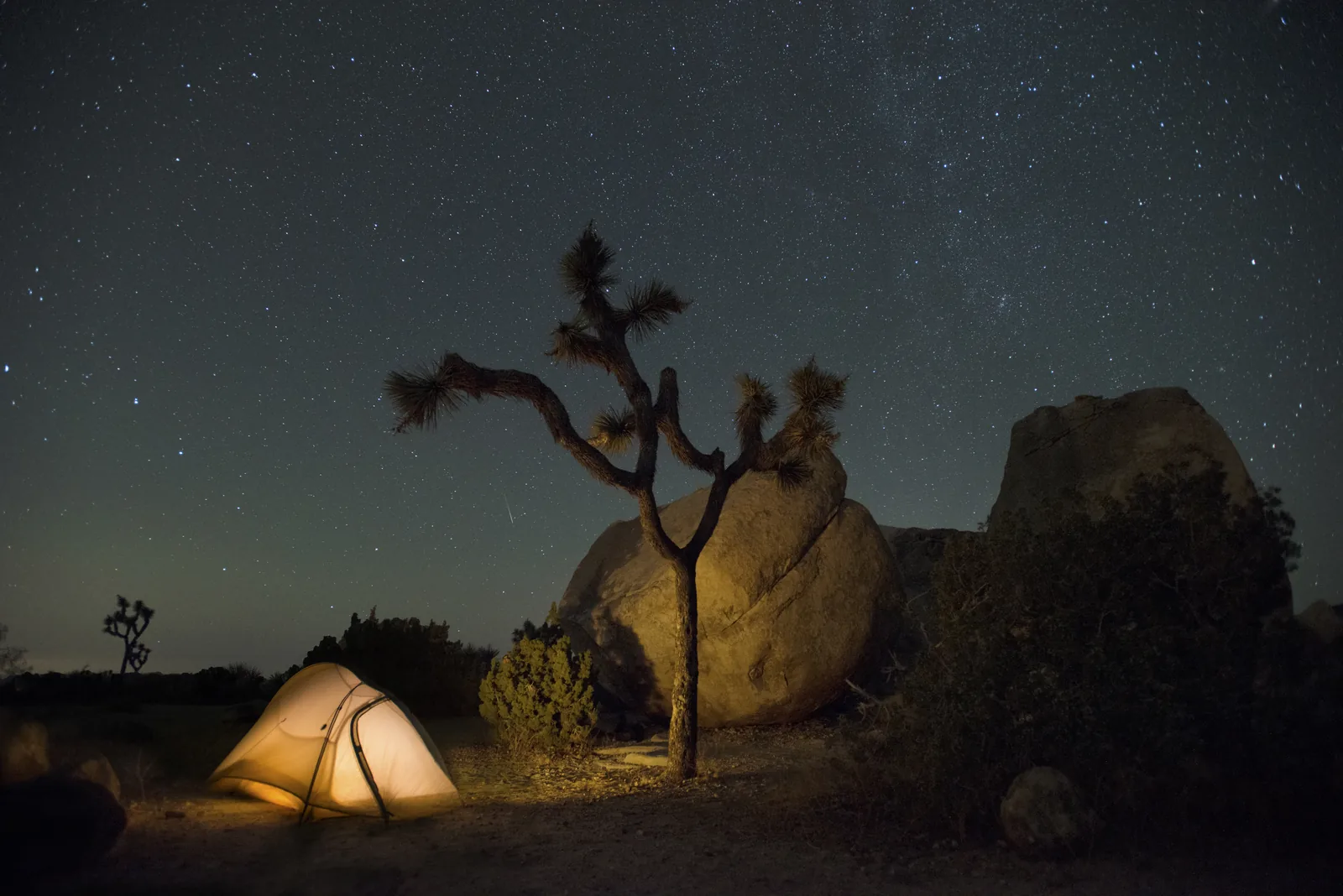
Quick decision: Winter brings mild 60°F hiking days and freezing 32°F nights (plus wind). Reserve a site on Recreation.gov before entering, pack water for every campground except Black Rock and Cottonwood, and insulate against cold ground—not just cold air.
If you are planning *what to do during the day*, read our Joshua Tree With Kids guide. If you are still comparing winter destinations, start with our Winter National Parks planner. This guide covers overnight winter camping decisions only: whether to camp, which campground fits, tent vs. RV limits, what to pack, and how to pivot if weather turns.
Is Winter a Good Time to Camp in Joshua Tree?
Winter (December through February, plus late November and early March) is a popular desert camping season. Summer heat over 100°F closes several campgrounds, whereas winter delivers crisp 60°F (15°C) afternoons and clear dark skies for stargazing.
The family challenge is the 30-degree daily temperature swing paired with early sunset (around 4:45–5:15 p.m.). Dinner, dishwashing, and bedtime routines all happen in the dark and cold. Most park campgrounds sit between 3,800 and 4,500 feet, where overnight temperatures regularly hit freezing (32°F / 0°C) or lower, and winter storms can bring strong winds, rain, or occasional snow at higher elevations.
Winter tent camping works well when:
- Kids are ready for cold-air sleeping inside properly rated bags on insulated pads.
- You arrive with enough afternoon light to pitch camp before 4:30 p.m.
Skip or shorten tent camping when:
- The forecast shows 20+ mph gusts or freezing rain (wind chills kids fast and shakes tents all night).
- You have a baby or toddler who kicks off covers without a heated RV or campervan.
Which Campground Should You Book?
Joshua Tree has roughly 500 campsites across nine campgrounds. Five standard campgrounds require reservations, plus Sheep Pass for group camping (6 group sites, starting at $55/night). Three others are first-come, first-served. Book on Recreation.gov up to six months ahead (and same-day if open) before driving in—cell service inside the park is very limited.
| Campground | Booking & Fee | Water & Toilets | Elevation | Family & Rig Fit |
|---|---|---|---|---|
| Black Rock (99 sites) | Reservation · $35/nt | Potable water, flush toilets, $5 dump | 4,000 ft | Best for first-time families & RVs; 5 mi to Yucca Valley; dead-end road (drive out to reach main park) |
| Cottonwood (62 sites) | Reservation · $35/nt | Potable water, flush toilets, $5 dump | 3,000 ft | Lowest elevation (milder nights); near I-10 South Entrance; open desert, fewer boulders |
| Jumbo Rocks (124 sites) | Reservation · $30/nt | No water · Vault toilets | 4,400 ft | Classic boulder scenery & amphitheater; central Park Blvd; max 35 ft RV (20 ft trailer) |
| Indian Cove (101 sites) | Reservation · $35/nt | No water at sites · Vault toilets | 3,200 ft | Sheltered rock coves; water jug fill at ranger station 2 mi north; no road access to main park |
| Ryan (31 sites) | Reservation · $30/nt | No water · Vault toilets | 4,000 ft | Quieter central base near Ryan Mountain; separate equestrian sites (horse required) |
| Hidden Valley (44 sites) | First-come · $25/nt | No water · Pit toilets | 4,200 ft | Iconic boulders; open year-round; 25 ft combined vehicle limit |
| Belle (18 sites) | First-come · $25/nt | No water · Pit toilets | 3,800 ft | Small & quiet; typically closed in summer (check NPS alerts); most sites fit 25–30 ft RVs (35 ft max) |
| White Tank (15 sites) | First-come · $25/nt | No water · Pit toilets | 3,800 ft | Tiny loop near Arch Rock; typically closed in summer (check NPS alerts); 25 ft combined limit |
Best Picks by Family Style
- Best for first-time winter campers: Black Rock. One of only two campgrounds with potable water and flush toilets, five miles from Yucca Valley groceries, and a weekend Nature Center. Tradeoff: it sits on a dead-end road in the northwest corner, so reaching Park Boulevard takes an extra drive.
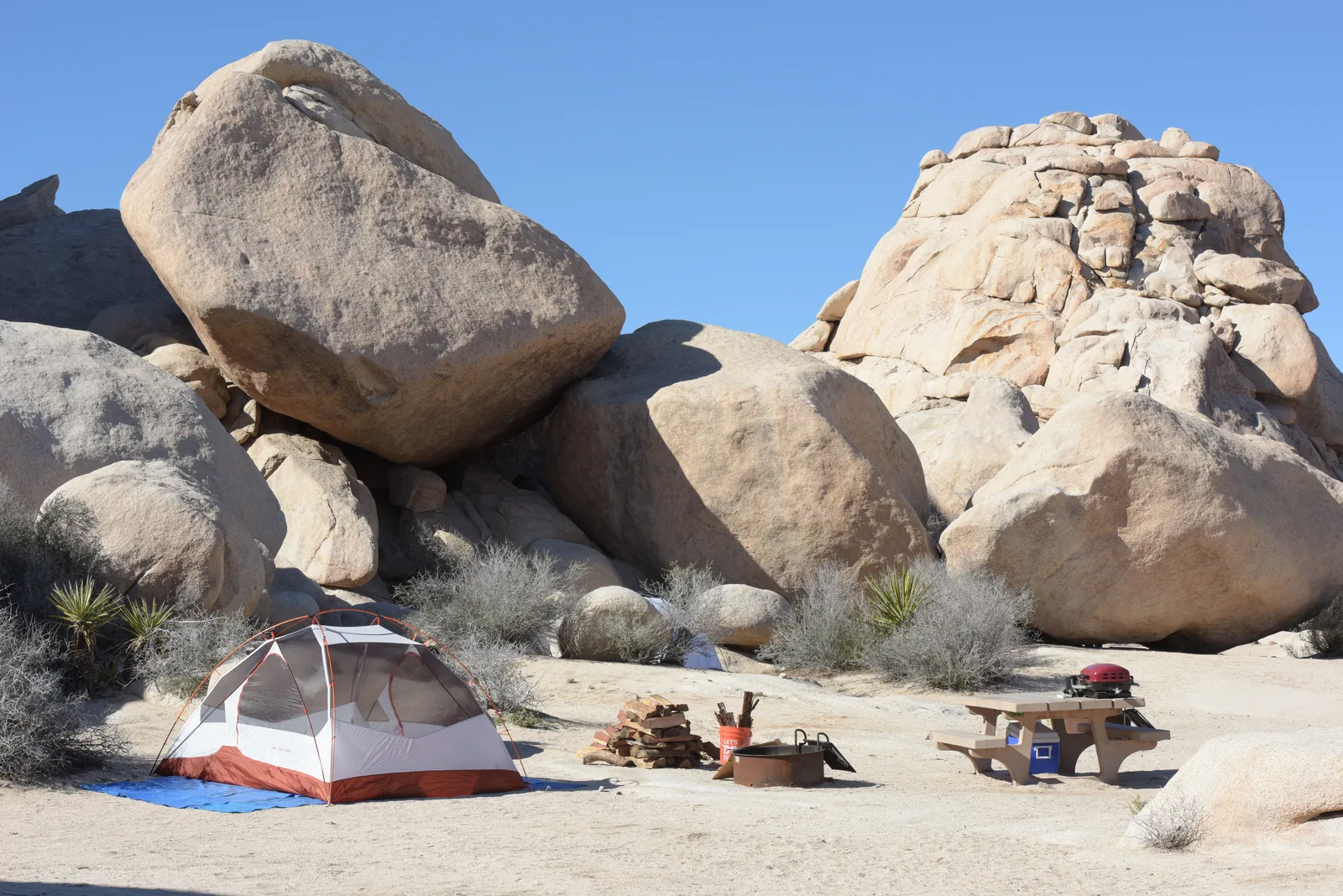
- Best for boulder scenery: Jumbo Rocks. Centrally located among towering granite formations with an amphitheater for ranger talks. Expect no water and cold 4,400-foot nights.
- Best for milder nights: Cottonwood. At 3,000 feet on the southern I-10 side, nights often run warmer than the northern plateau, and you get flush toilets, potable water, and a $5 dump station—trading away the famous Joshua trees and boulder piles around camp.
- Best for sheltered coves (with a catch): Indian Cove. Granite walls block some wind, but no road connects Indian Cove to the main park; you must exit to Highway 62 and re-enter at Twentynine Palms or Joshua Tree.
First-Come, First-Served Reality
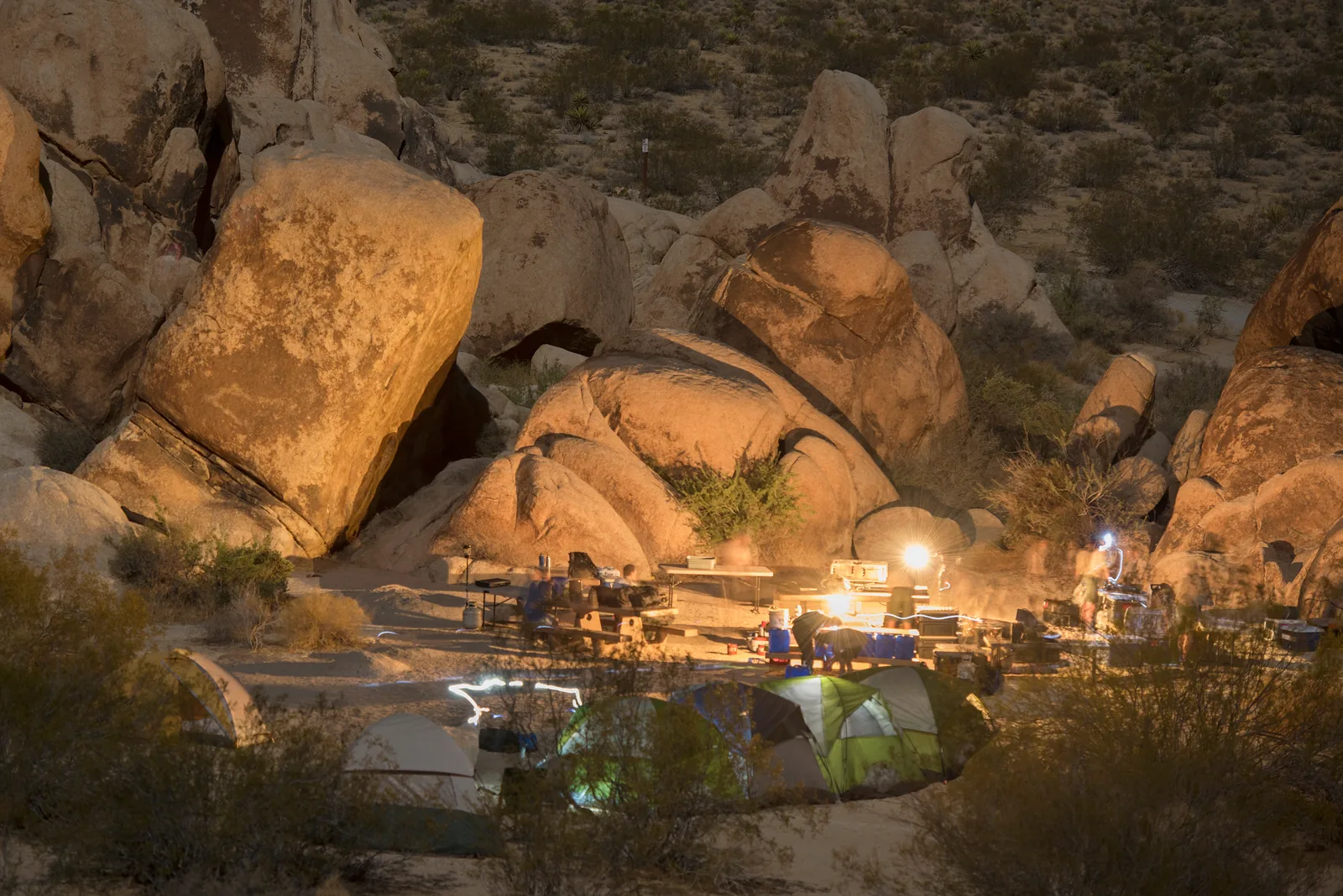
Hidden Valley, Belle, and White Tank cost $25/night (card only, payable within one hour at an entrance station). Because campgrounds fill nearly every weekend from September through May, first-come sites usually fill by Friday afternoon. Only rely on them mid-week with a backup plan.
Tent vs. RV or Campervan in Winter
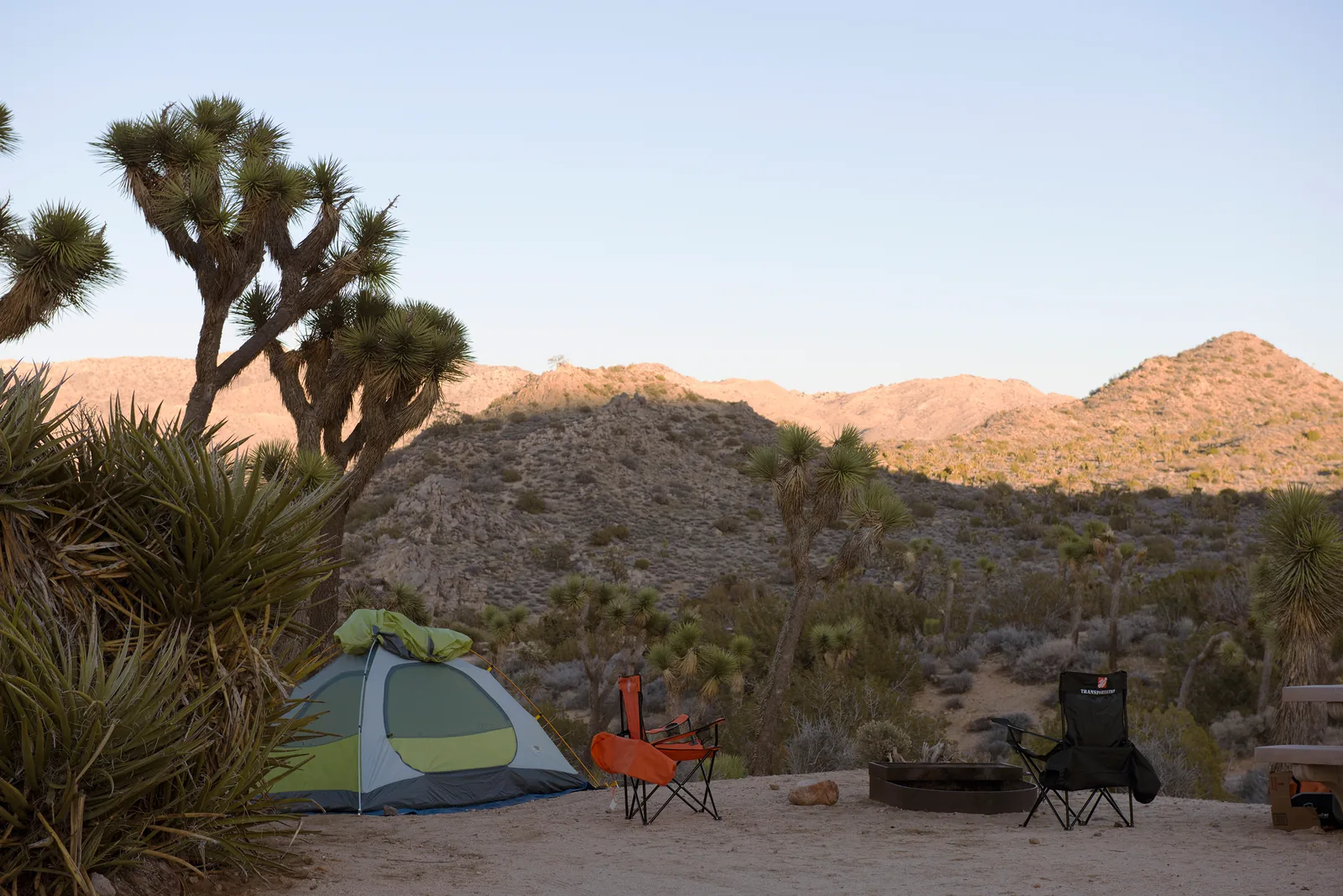
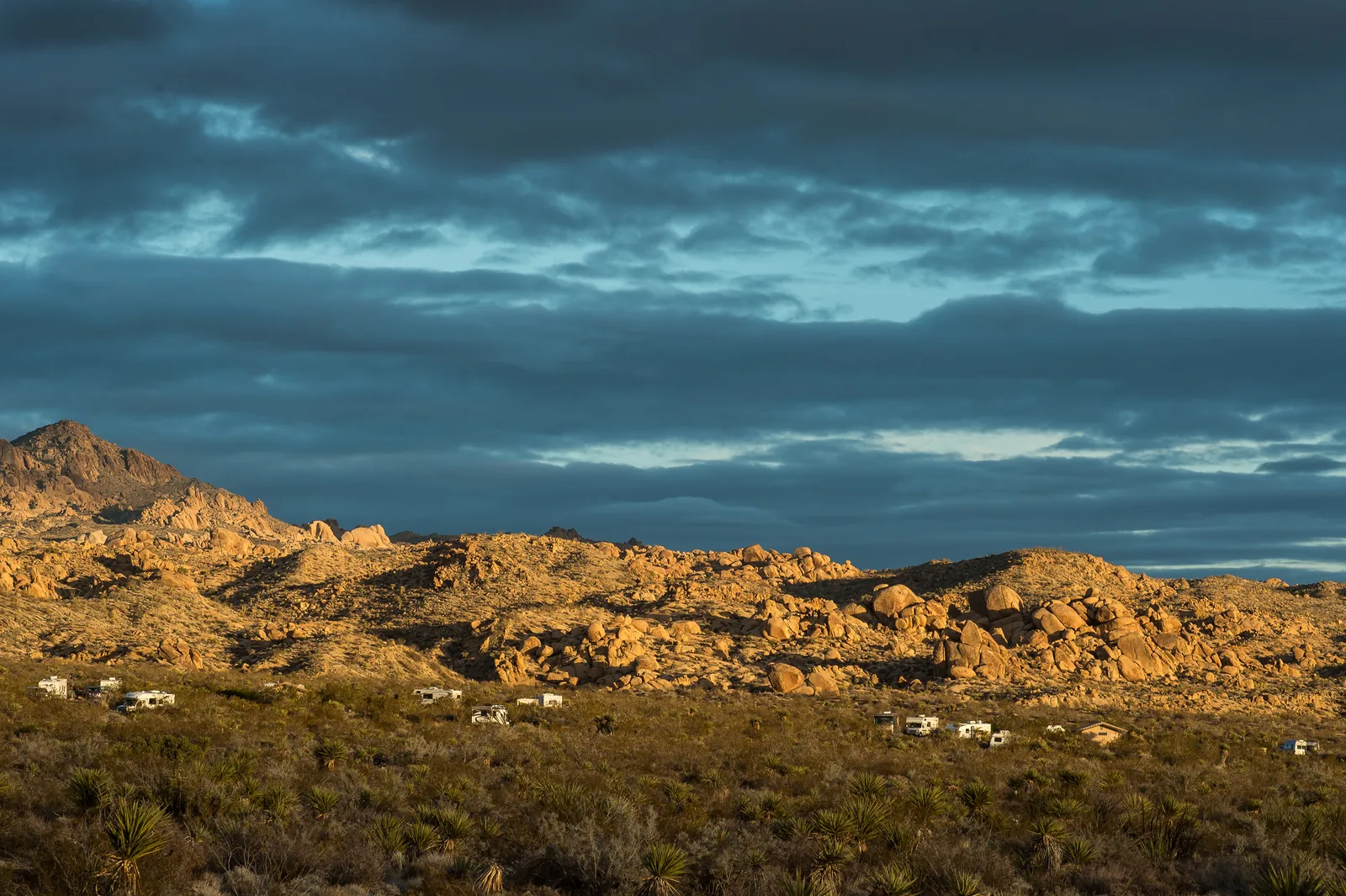
Every Joshua Tree campground operates on dry-camping rules:
- No hookups anywhere. Zero sites offer electric, water, or sewer connections.
- Generator hours: Allowed only 7–9 a.m., noon–2 p.m., and 5–7 p.m. Quiet hours run 10 p.m.–6 a.m.
- No showers in the park. Paid showers ($5–$30) are available in gateway towns.
- Water & freeze checks: Only Black Rock (near site 6) and Cottonwood (between the visitor center and campground) have RV water fill and $5 dump stations. In sub-freezing nights, protect exposed RV water lines and keep furnace batteries charged.
How to Pack for Desert Winter Nights
1. Sleep System (Ground Insulation First)
- Insulated pads (R-value 4.0+): Household air mattresses circulate cold air beneath you. Use an insulated camping pad or layer closed-cell foam underneath.
- 20°F-rated sleeping bags (check comfort rating): Summer 40°F bags are not enough for freezing desert nights. Look at the comfort rating—not just the lowest survival rating—and match it to the forecast low and your child's warmth needs. For kids in adult bags, tuck a fleece blanket at the footbox so they are not heating dead air.
- Fresh dry sleep clothes: Change kids completely out of daytime socks and base layers before bed.
Tent heating safety warning: Never run fuel-burning camp stoves, charcoal grills, or fuel heaters inside a tent or enclosed space. CDC warns they can cause fatal carbon monoxide poisoning—even if tent doors or vents are open.
2. Clothing, Lighting & Food Rules
- Three-layer kit: Moisture-wicking base, fleece/wool mid-layer, windproof insulated jacket, plus knit hats and gloves for 5 p.m. darkness and breakfast. Closed-toe shoes protect against rough granite and cactus spines.
- Headlamps for everyone: Red-light mode keeps night vision intact around camp and vault toilets.
- Strict food storage: Ravens and rodents raid unattended picnic tables even at midday. Lock all food, trash, coolers, sunscreen, and toiletries inside your vehicle or a hard bin.
- Local firewood & water to douse: Campgrounds do not sell firewood, and gathering park vegetation is illegal. Buy wood in town and pack extra water to drown embers completely.
3. Power & Cooling (Only When Needed)
Skip heavy electronics for a 1–2 night winter tent trip—an ice cooler and USB power banks for phones and headlamps are enough.
Consider dedicated off-grid gear only if you need overnight power for a CPAP machine or heated blanket during quiet hours (a quiet LiFePO4 station like an Anker SOLIX C1000-class unit), or multi-day SUV/van refrigeration without melting ice (a 12V fridge like a BODEGA T36). If you are sizing that setup, check our 12V fridge daily power guide and SUV cargo fit calculator.
Winter Family Camping Checklist
- Offline Recreation.gov confirmation and NPS App map
- 1+ gallon drinking water per person/day, plus cooking and fire-dousing water
- Insulated pads (R-value 4.0+) and comfort-rated 20°F sleeping bags
- Dry sleep clothes, wool socks, beanies, and gloves
- Headlamps with spare batteries
- Locally bought firewood and propane stove fuel
- Vehicle-safe food/toiletry storage bins
- Morning check of NPS Current Conditions
What to Do If Weather Turns or Sites Are Full
Check the National Weather Service forecast for your specific campground elevation 48 hours out, and keep three pivots ready:
- Shorten the stay: Camp one clear night and spend the rest in town.
- Use legal overflow outside the park: Roadside/pullout sleeping is illegal. Nearby Bureau of Land Management (BLM) dispersed zones north and south of the park allow free camping (no water, toilets, or trash; stay 300+ feet from roads; California campfire permit required), or book a private RV park in Yucca Valley, Joshua Tree, or Twentynine Palms.
- Switch to a town bed + day plan: Gateway motels and rentals in Joshua Tree, Yucca Valley, or Twentynine Palms keep everyone warm while you still enjoy the mild daytime trails in our Joshua Tree With Kids guide. If forecast winds or cold snaps force a change, you can compare hotels and vacation rentals near Joshua Tree (affiliate link—eligible bookings may earn a commission at no extra cost to you).
Frequently Asked Questions
Is it too cold to camp in Joshua Tree in winter with kids?
Winter daytime highs average around 60°F (15°C), which is comfortable for hiking, but nighttime lows regularly drop near or below freezing (32°F / 0°C), especially at 4,000-foot campgrounds like Black Rock and Jumbo Rocks. Families can camp comfortably with sleeping bags whose comfort rating fits freezing nights, insulated pads, and wind-ready layers, or choose Cottonwood (3,000 ft) or a gateway hotel during cold snaps.
Which Joshua Tree campgrounds have water and flush toilets in winter?
Only two campgrounds in Joshua Tree National Park have potable water and flush toilets: Black Rock (northwest corner near Yucca Valley) and Cottonwood (southeast end near I-10). Jumbo Rocks, Indian Cove, Ryan, Hidden Valley, Belle, and White Tank have vault or pit toilets and no water at the campsites.
Are there electric hookups for RVs or tents in Joshua Tree National Park?
No. None of the campgrounds inside Joshua Tree National Park have electric, water, or sewer hookups at individual campsites. Generator use is restricted to 7–9 a.m., noon–2 p.m., and 5–7 p.m., and quiet hours run from 10 p.m. to 6 a.m.
Should I reserve a campsite or try for first-come, first-served in winter?
Reserve on Recreation.gov up to six months in advance whenever possible. Five standard campgrounds require reservations (Jumbo Rocks, Black Rock, Cottonwood, Indian Cove, and Ryan), plus Sheep Pass for group camping. Hidden Valley, Belle, and White Tank are first-come, first-served and fill nearly every weekend from September through May, often by Friday afternoon.
Where can we camp if all Joshua Tree campgrounds are full?
Sleeping in your vehicle along park roadsides or pullouts is illegal. Legal alternatives are Bureau of Land Management (BLM) dispersed camping areas north and south of the park (no water, toilets, or trash service), private RV parks in Yucca Valley, Joshua Tree, or Twentynine Palms, or gateway town lodging.
Official planning sources
Recheck park alerts, weather forecasts, and campsite rules shortly before your trip.
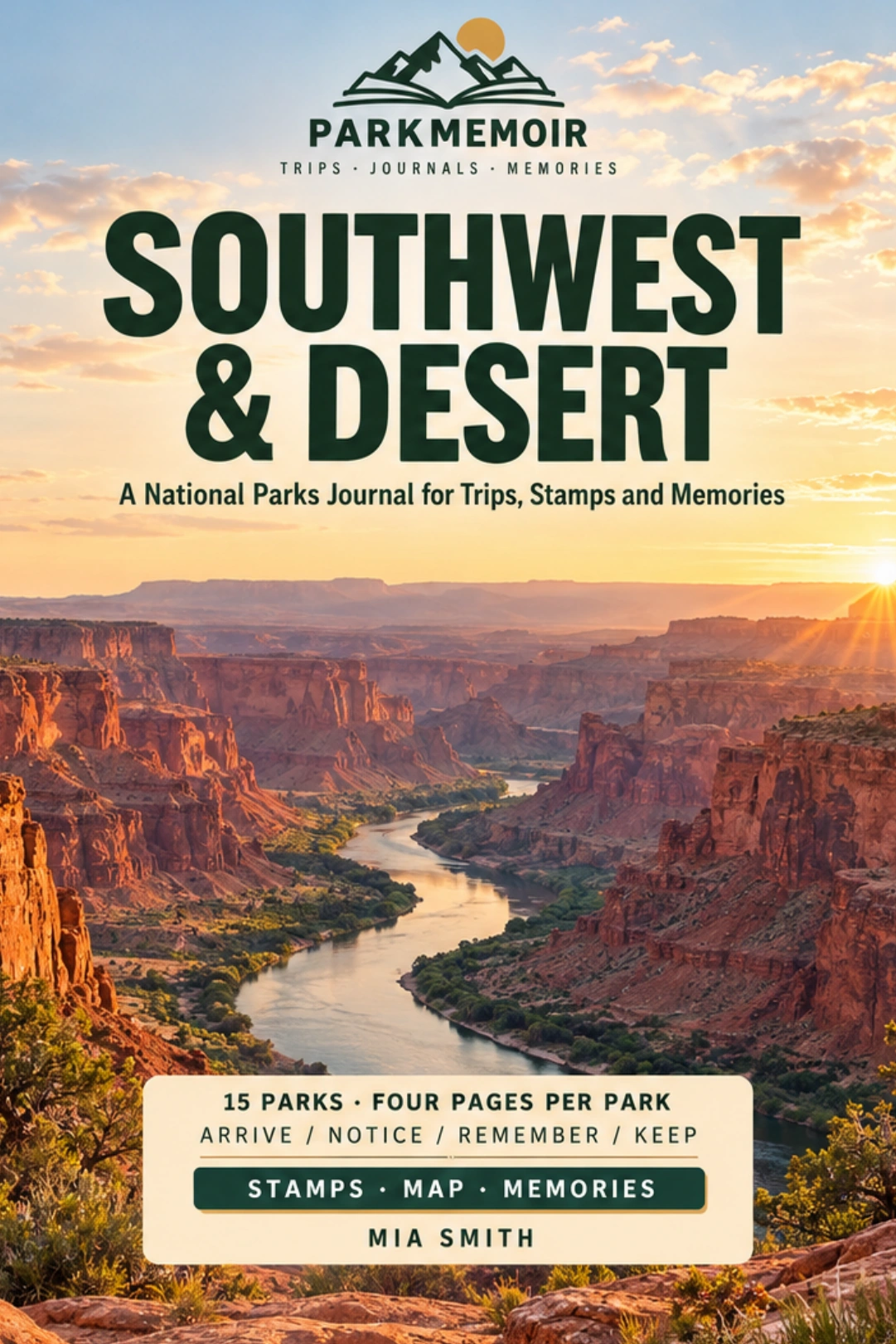
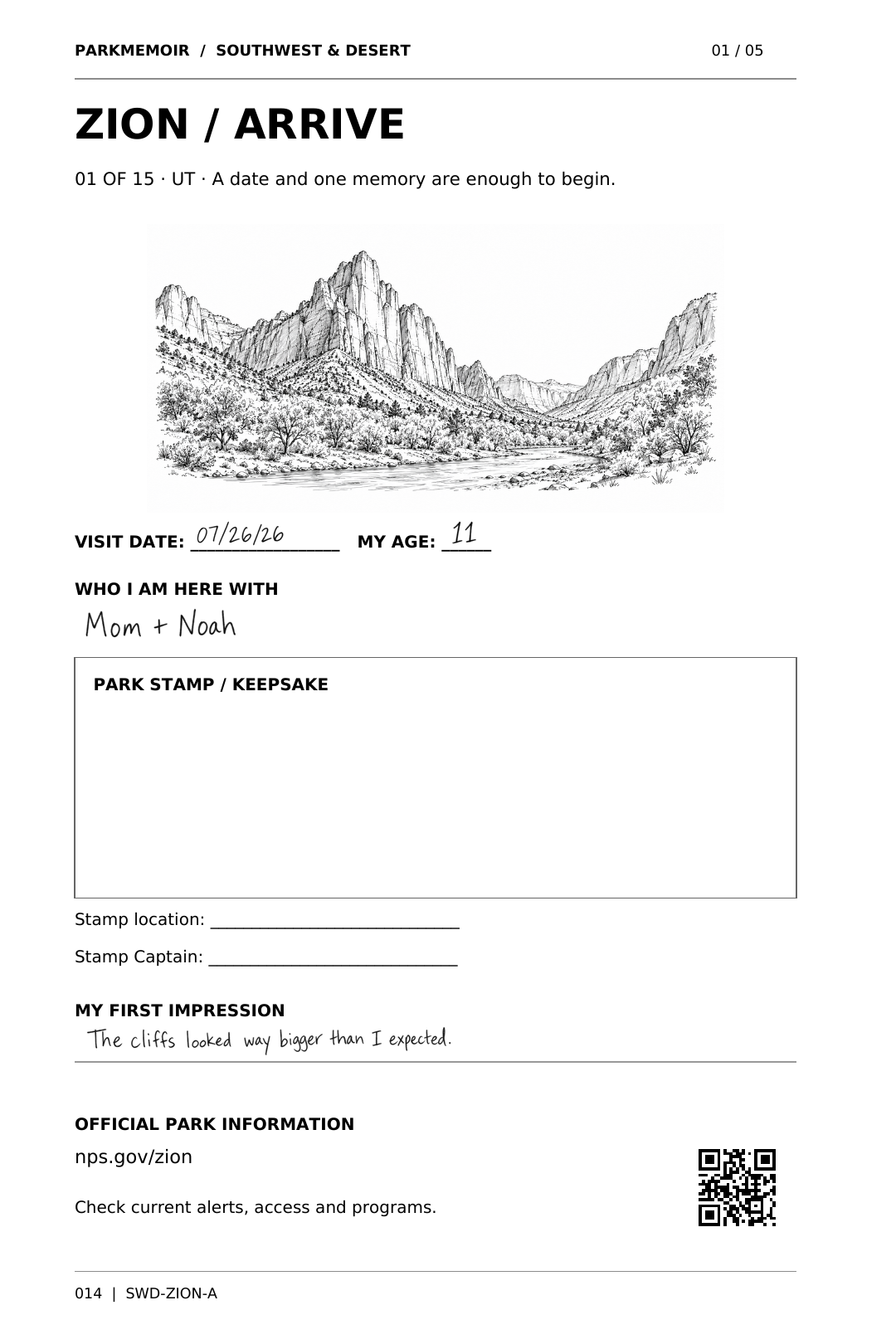
One child. One book. Their own park story.
Give each child a place to sketch or write down what they noticed around camp and on the trail.
Book 01 cover and a handwritten Zion ARRIVE example from the same journal.
See the Southwest & Desert Journal