
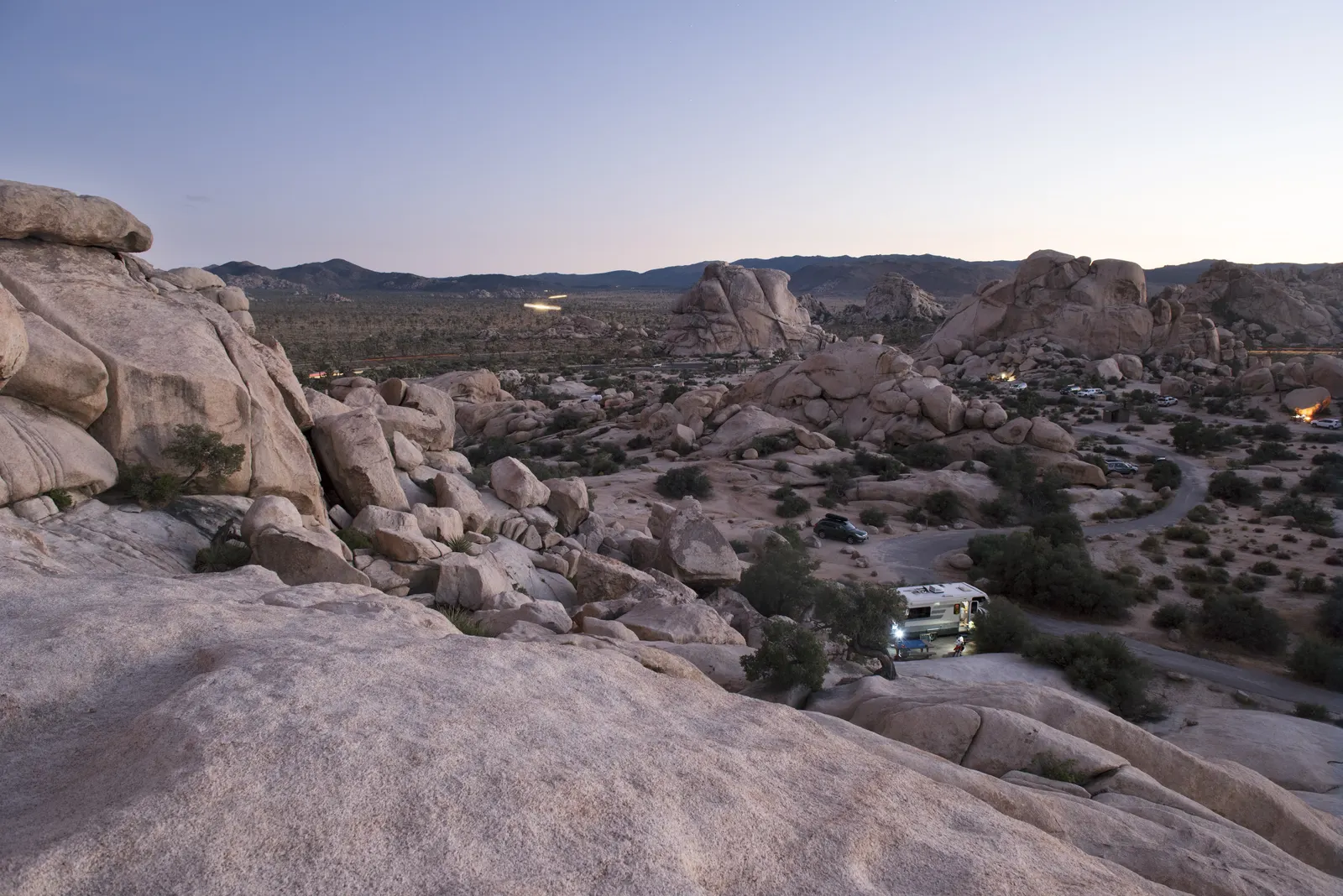
A family day in Joshua Tree is much easier when you stop treating it like a checklist of long desert hikes and plan a small number of easy stops, with enough time for water, snacks, and the drive back before dark.
Especially in winter and late fall (November through March), Joshua Tree can be a good cool-season choice for children. Days are often milder than summer, but the weather, wind, and your family’s energy still determine how much walking makes sense. The trade-off is short winter daylight, chilly mornings and evenings, and heavier weekend crowds at the West Entrance.
Quick answer: choose two core stops such as Hidden Valley and Skull Rock, keep a third stop optional, bring your own food and water, and check the actual sunset time and NPS conditions before leaving town.
Why Winter Is the Sweet Spot (and What Still Trips Families Up)
While summer temperatures in the Mojave Desert regularly climb past 100°F / 38°C, winter daytime temperatures are generally milder, though wind, cold and rocky terrain may still require a shorter walk. That makes Joshua Tree a standout choice if you are comparing which national parks are open in winter.
Still, a winter desert day has three quiet traps:
- Early sunset: Sunset can be before 5 p.m. in November and December. Look up the sunset time for your actual travel date, and leave margin to return to town in daylight.
- Sharp temperature drops: The NPS lists typical winter daytime temperatures around 60°F / 15°C, with nights often near or below freezing; exposed viewpoints may be windy.
- Busy holiday and weekend gates: Because winter is peak season, West Entrance queues and small parking lots fill quickly by mid-morning.
Which Entrance Should You Use With Kids?
Option A: West Entrance (Joshua Tree)
This is a practical entrance when you plan to visit Hidden Valley or Keys View. Holiday and weekend queues can be long, so have a backup plan rather than counting on a precise gate arrival time.
Option B: North Entrance (Twentynine Palms)
This is another option for trips based in Twentynine Palms or focused on Skull Rock and Jumbo Rocks. Check the current visitor-center and restroom locations before driving to the entrance; an alternate gate is not a guarantee of a shorter queue.
Option C: South Entrance (Cottonwood)
Convenient if you are driving in from I-10, though it puts you in the lower Colorado Desert side of the park—a longer drive from many of the classic northern boulder stops. Use the NPS distance chart to decide whether the south-to-north crossing fits your day.
Important before entering: There are no restaurants, grocery stores, or gas stations inside the park, there is no drinking water in the park interior; fill bottles at a staffed visitor center or in town, and cell service is unreliable across most of Park Boulevard. Fill your tank, load offline maps, and pack all food and water in town before reaching the gate. See current park alerts on the official NPS Joshua Tree plan-your-visit page.
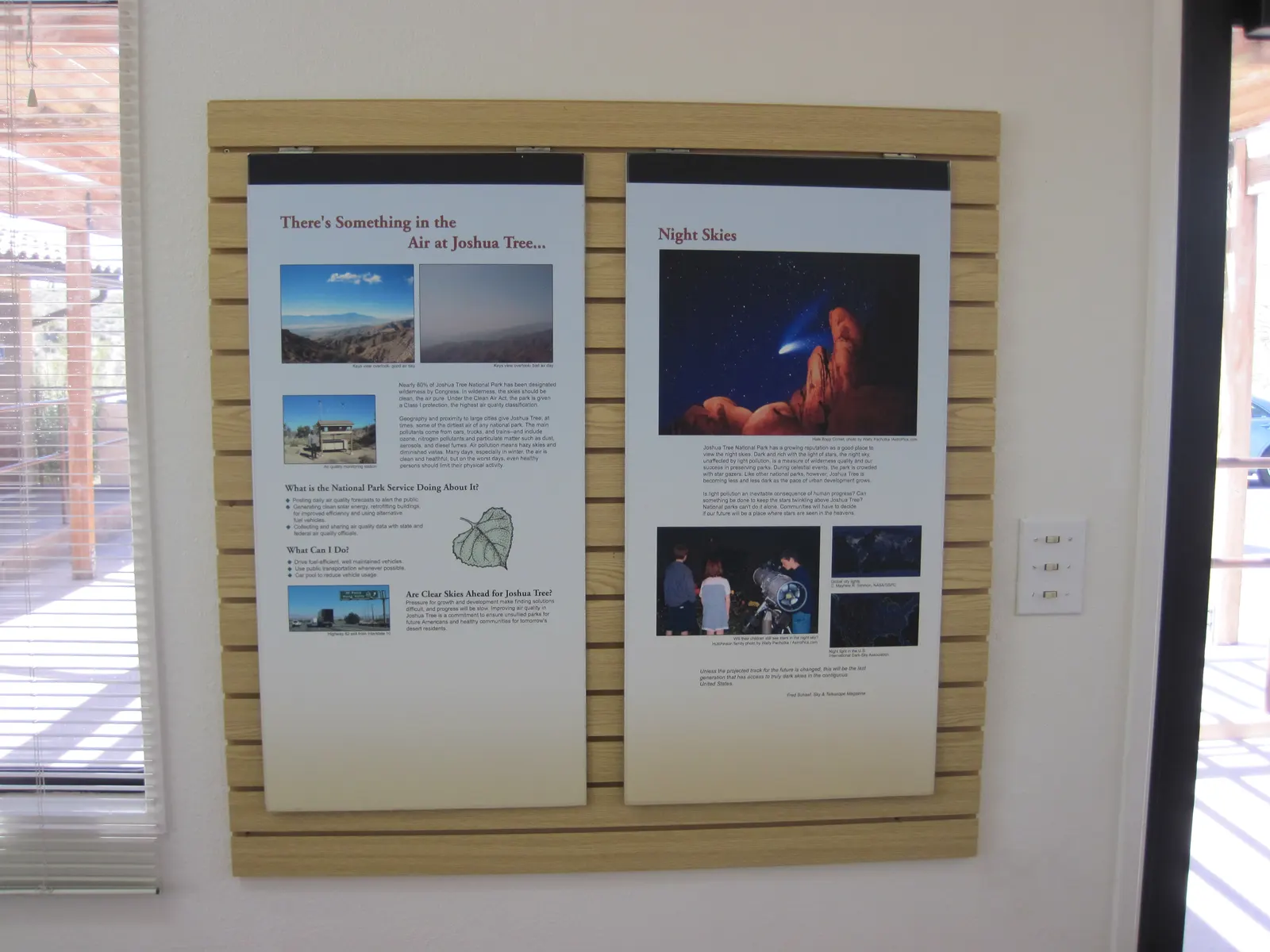
Is Joshua Tree Good for Kids?
Yes—if you let kids climb, look closely, and take breaks instead of pushing mileage. Most of the park's best family moments happen within a few hundred yards of the parking area.
What I’d Plan by Age
| Age | Plan around | Avoid forcing |
|---|---|---|
| Toddlers / preschoolers | Flat dirt loops, sandy washes, short boulder watching, early lunch | Unfenced cactus paths without holding hands, long afternoon drives |
| Ages 6–10 | Junior Ranger booklet, Hidden Valley loop, observing boulders and keeping to safe, appropriate marked routes | Over-scheduling 5+ stops in short winter daylight |
| Ages 11–13 | Photography, desert ecology, reading the park map, sunset at Keys View | Treating every stop like a quick photo-op without time to explore |
| Teens | Choosing one longer scramble or trail, sunset + first-hour stargazing | Early wake-ups without warm layers or enough snacks |
Easy Stops and Short Walks I Would Put First
1. Hidden Valley Nature Trail — one classic short loop
This 1-mile loop crosses uneven rocky and sandy terrain among large granite boulders. NPS suggests roughly an hour; allow longer for younger walkers. Do not promise a stroller-friendly surface, and do not make climbing off-trail boulders part of the required route. Parking may be limited on busy weekends.
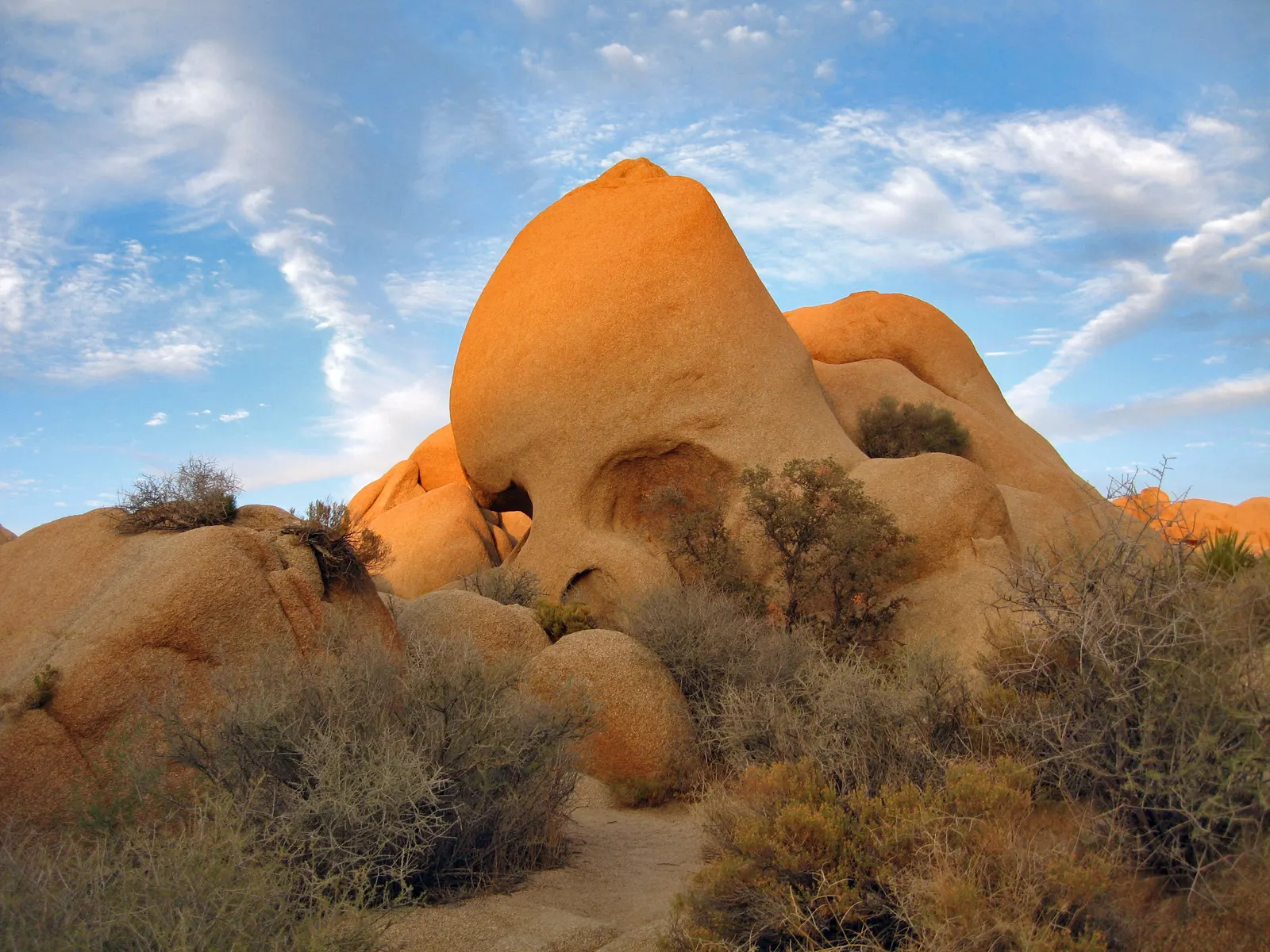
2. Skull Rock & Discovery Trail — instant payoff for tired legs
Skull Rock is visible near Park Boulevard. For a short educational walk, the NPS Discovery Trail is a 0.7-mile loop across sandy washes and rock formations. The separate Skull Rock loop is 1.7 miles; do not confuse the two. Families with tired legs can keep this to a brief roadside stop, watching carefully for vehicles and pedestrians.
3. Barker Dam — short loop with history
An easy 1.1-mile loop, but not a flat sidewalk: it includes rocky and sandy sections and steps. The NPS prohibits strollers on Barker Dam Trail. Treat the scenery and history as the reason to visit, not the expectation of water at the dam.
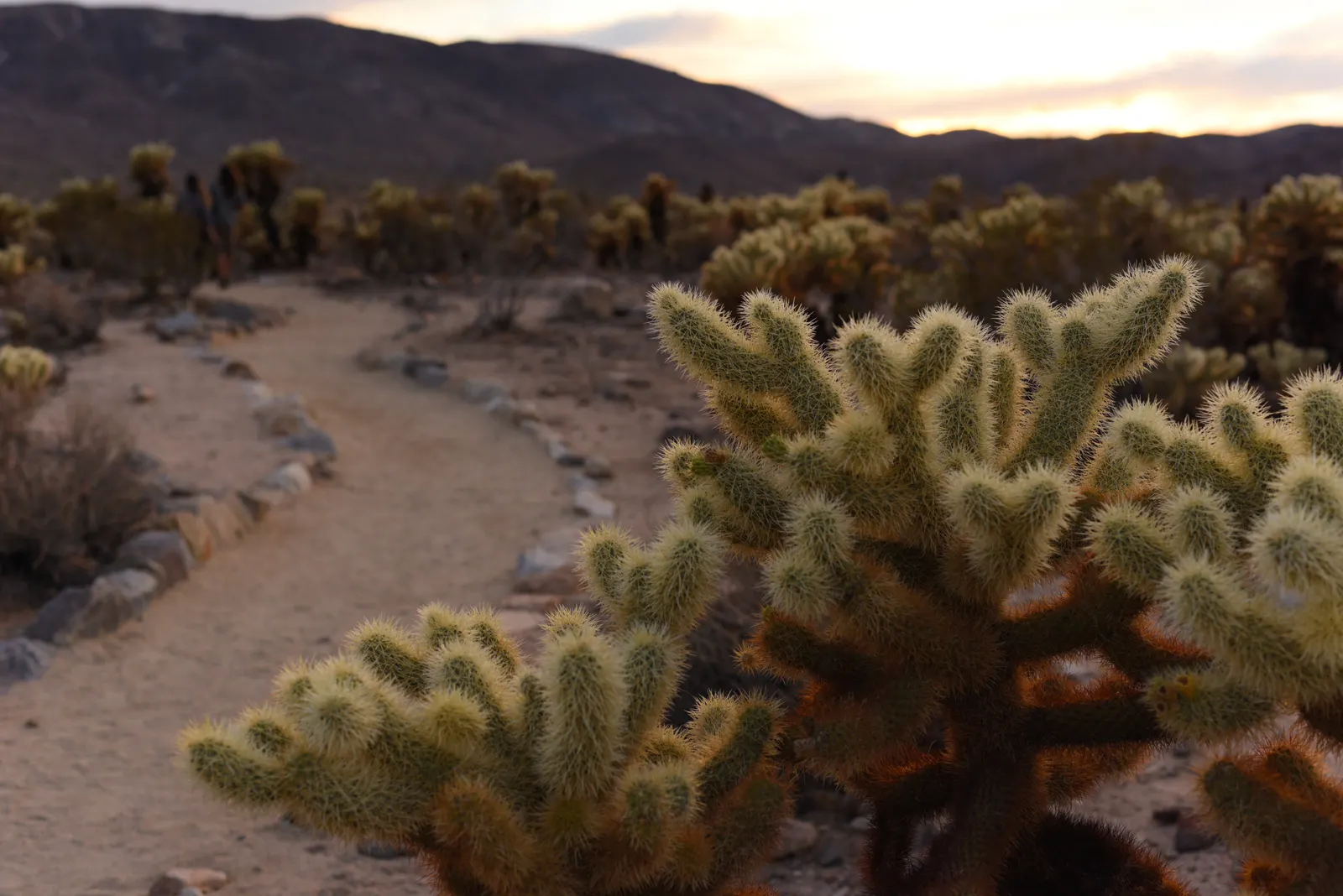
4. Cholla Cactus Garden — unforgettable, with one strict rule
This 0.25-mile mostly flat dirt loop is lined with dense cholla cactus. It is not a boardwalk. Keep small children close, stay on the designated path and wear closed-toe shoes. The garden is a considerable drive from Hidden Valley, so make it an alternative rather than an automatic third stop. Check NPS alerts before making the drive.
5. Keys View — paved overlook for late afternoon
The upper overlook has a 0.25-mile paved but steep loop. For families who need an easier approach, NPS describes a 0.1-mile lower viewpoint with a more level paved path. Bring warm layers for the exposed ridge, and skip this add-on if parking, weather or daylight would make the return stressful.
6. Junior Ranger — start at the Visitor Center
Ask for a Junior Ranger booklet at a staffed visitor center or an entrance station. The NPS describes the typical age range as 5–13, while people of all ages may participate. Complete the appropriate activities and share them with a ranger to earn a badge, subject to staff availability. Check NPS Joshua Tree Kids & Youth for current visitor center hours.
A Realistic Family Day in Joshua Tree (Winter Rhythm)
- Morning | Start with supplies and the first stop: Fill water bottles and use restrooms where available before entering. Pick up Junior Ranger booklets if staff are present; entrance queues and opening times vary.
- Late morning | One main walk: Choose Hidden Valley or Barker Dam, not both by default. Barker Dam is not a stroller option.
- Midday | Lunch and reset: Eat the lunch you brought at a legal picnic area. Shade and tables may be limited; secure food, pack out trash, and leave wildlife alone.
- Early afternoon | One optional stop: If everyone has energy, visit Skull Rock. Treat Cholla Cactus Garden as a separate, longer-driving alternative, not a compulsory addition.
- Before sunset | Decide whether to finish: Choose Keys View only when there is enough daylight and the weather is suitable. Otherwise, head to town for dinner. Never rely on a fixed 5:15 p.m. winter sunset.
What I Would Not Force
- Long exposed climbs at midday: Skip steep, sustained climbs like Ryan Mountain unless everyone in the family genuinely wants a 3-mile round-trip hike with a sustained climb.
- Backcountry dirt roads in a rental sedan: Stick to paved park roads for this family itinerary. NPS listed Geology Tour Road as temporarily closed on November 13, 2026. Recheck official alerts before your trip.
- Sandals or flip-flops on boulders: Desert granite is rough like coarse sandpaper, and cactus spines hide in the sand. Closed-toe shoes with good grip are non-negotiable.
- Cramming both ends of the park in one winter day: With early winter sunset, trying to combine Cottonwood, Cholla, Keys View, and Hidden Valley turns the day into car time. Pick one side or keep driving tight.
Where to Stay & What to Pack for Winter
Because there are no lodges inside Joshua Tree National Park, families usually base in Joshua Tree (closest to the West Entrance and family-friendly cafes), Twentynine Palms (calmer North Entrance access and often better winter availability), or Yucca Valley (easy grocery runs and larger family rentals).
To compare a hotel-based visit with camping, start by choosing the town that fits your next morning’s entrance and family meal plans.
Winter desert daypack essentials:
- More water than you think you need (dry desert air dehydrates kids even in 60°F weather)
- Warm layers, windbreakers, and knit hats for Keys View and post-sunset temperatures
- Closed-toe grippy sneakers or hiking shoes
- Headlamps or flashlights for early winter dusk and stargazing
- Snacks, wipes, a small first-aid kit, and offline maps downloaded before leaving Wi-Fi
Check NPS Joshua Tree Current Conditions the morning you go for road work, weather, or parking advisories.
Help Kids Remember Joshua Tree
After a day of scrambling on boulders, ask three simple questions in the car or at dinner: What did you notice? What surprised you most? What do you want to keep from today—a Junior Ranger badge, a sketch of a Joshua tree, or one funny memory?
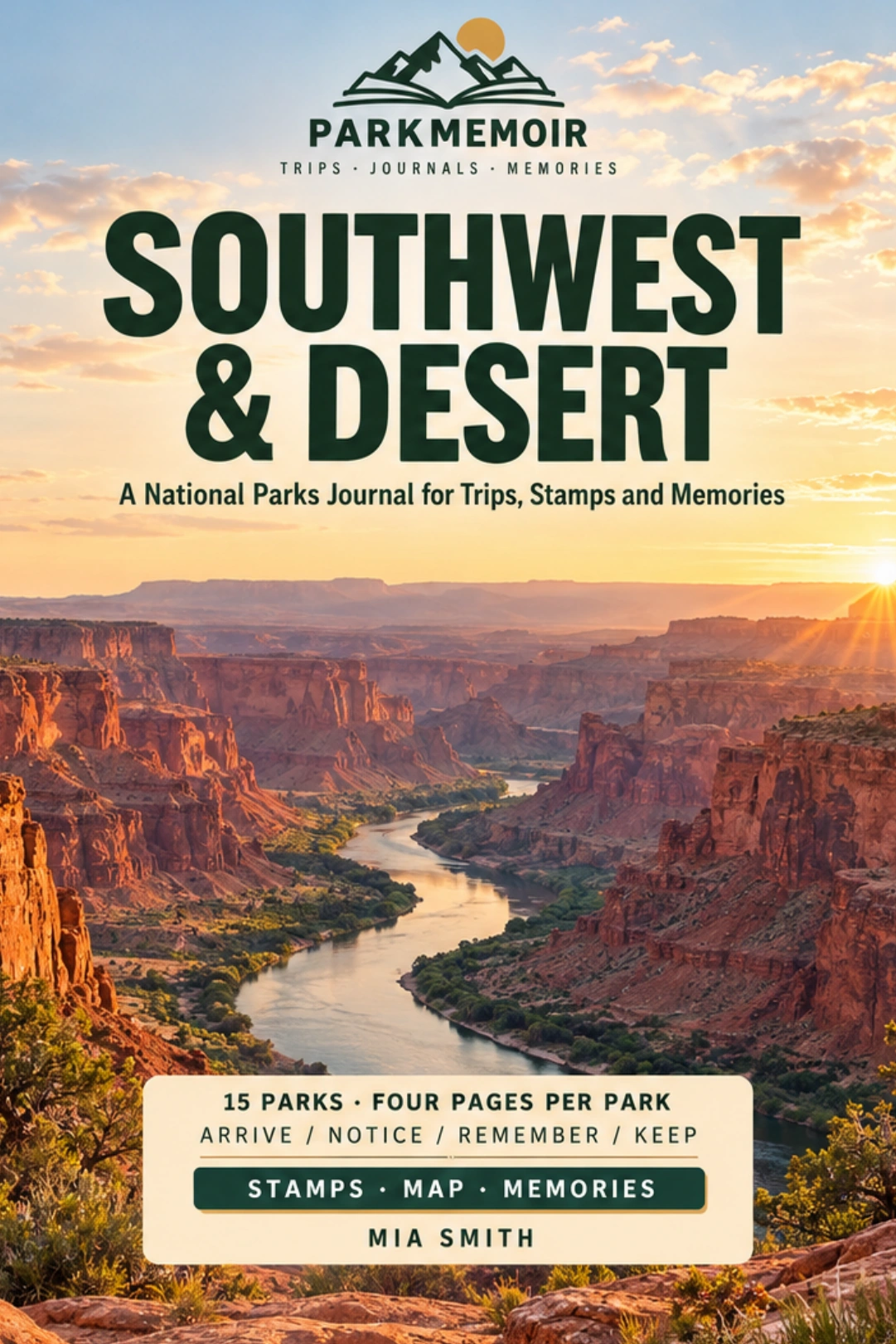
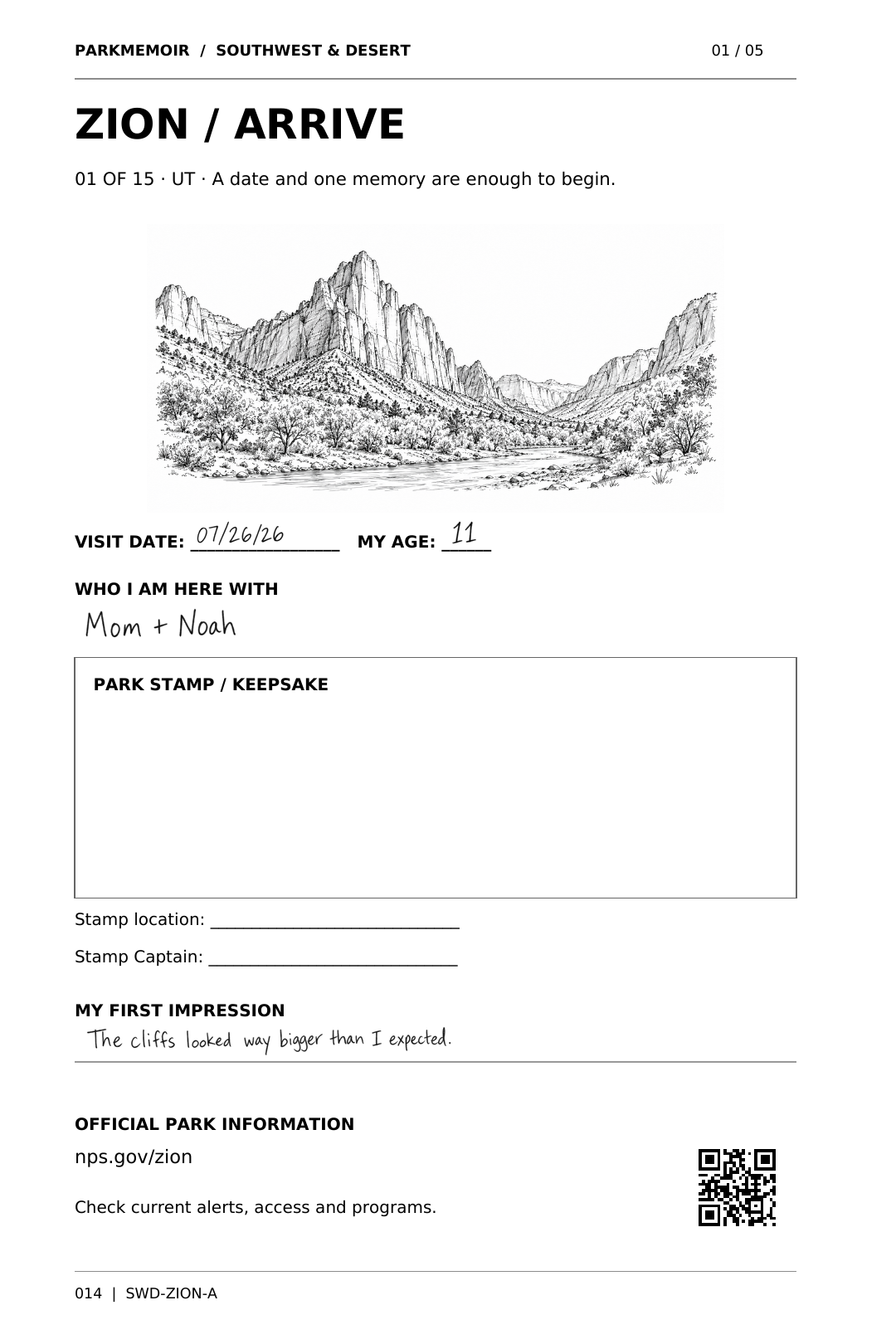
The PARKMEMOIR Southwest & Desert Journal includes Joshua Tree National Park and follows a calm ARRIVE → NOTICE → REMEMBER → KEEP rhythm. Older kids can write or sketch right at a picnic table, while younger kids can finish a page with a parent. When you are back home with Wi-Fi, you can use the Digital Companion to photograph completed pages and save them in your family archive.
Frequently Asked Questions
Is Joshua Tree National Park good for kids in winter?
Yes. Winter (November through March) is one of the best times to visit Joshua Tree with kids because daytime temperatures are mild and walkable, unlike extreme summer heat. Just plan for shorter daylight hours and cold temperatures after sunset.
How many days do you need in Joshua Tree with kids?
One full day can be enough for two core stops plus one optional stop. Cholla Cactus Garden and Keys View add substantial driving, so choose only what fits your family’s pace. Two days allow more flexibility.
Are there restaurants or water inside Joshua Tree National Park?
No. There are no restaurants, food stands, or gas stations inside the park, and drinking water is only available at limited locations. Pack all meals, snacks, and plenty of water before entering.
Is Joshua Tree stroller-friendly?
Do not assume a short trail is stroller-friendly. NPS prohibits strollers on Barker Dam Trail. The upper Keys View path is paved but steep, while the lower viewpoint has a more level paved approach. Cholla Cactus Garden is a dirt loop, not a boardwalk. Check current NPS accessibility guidance for your equipment.
Do you need a reservation to enter Joshua Tree?
No timed-entry reservation is currently required for day visits, though park entrance fees apply and West Entrance lines can back up on winter weekends and holidays.
Is Cholla Cactus Garden safe for toddlers?
It is a short, mostly flat dirt trail, not a boardwalk. Cholla segments can attach to skin or clothing. Keep toddlers close, remain on the designated path, and wear closed-toe shoes.
Official planning sources
Recheck park alerts shortly before your visit.
One child. One book. Their own park story.
Give each child a place to sketch or write down what they noticed in Joshua Tree.
Book 01 cover and a handwritten Zion ARRIVE example from the same journal.
See the Southwest & Desert Journal